Interactive Storytelling
What HQ, Rival Peak, Amazon, and Netflix tell us about the next wave of content

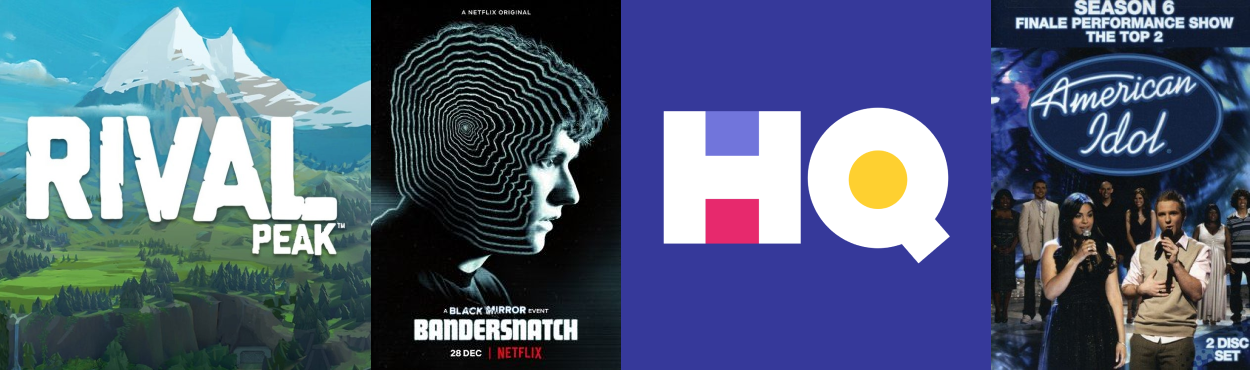
In 2007, Sanjaya Malakar transfixed the nation and rose to American Idol infamy. Every week, viewers would call & vote to keep him in the running, many encouraged by Vote for the Worst and Howard Stern. Despite Simon Cowell’s threats to quit, Sanjaya highlighted the power of the public vote - and how it could be gamed for the nation’s amusement. A decade later, HQ Trivia transfixed the world in a similar way. Millions would simultaneously take out their phones, cringe at Scott’s banter, and play to win a few dollars and perpetual bragging rights. HQ rise was meteoric, with a (free) Superbowl ad cementing its place in history.
The story of media’s evolution is intimately tied to the cultural and technological advances enabling audience participation. In the late 1800’s, readers would write letters to their favorite newspapers & magazines, asking questions & giving feedback. Tit-Bits magazine was one of the first to introduce an “Answers to the Correspondents” column in 1885, giving readers a way to be part of the story. Publications of all types incorporated reader content (from editorial articles to questions to photos), generating cultural mainstays from Dear Abby to Letters to Penthouse.


Skip forward to the 1920’s, and a new real time channel was growing quickly - Radio. Suddenly, the feedback loop for participation went from weeks to seconds. Callers could call into a radio show to request the next song, give feedback, play games, and even receive prank calls. It was hard not to be excited to hear your voice broadcasting to tens of thousands of people, in real time.
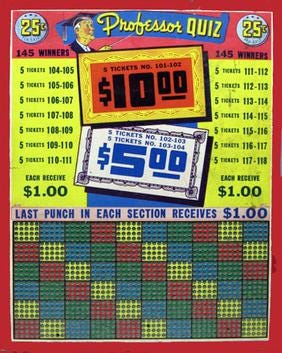
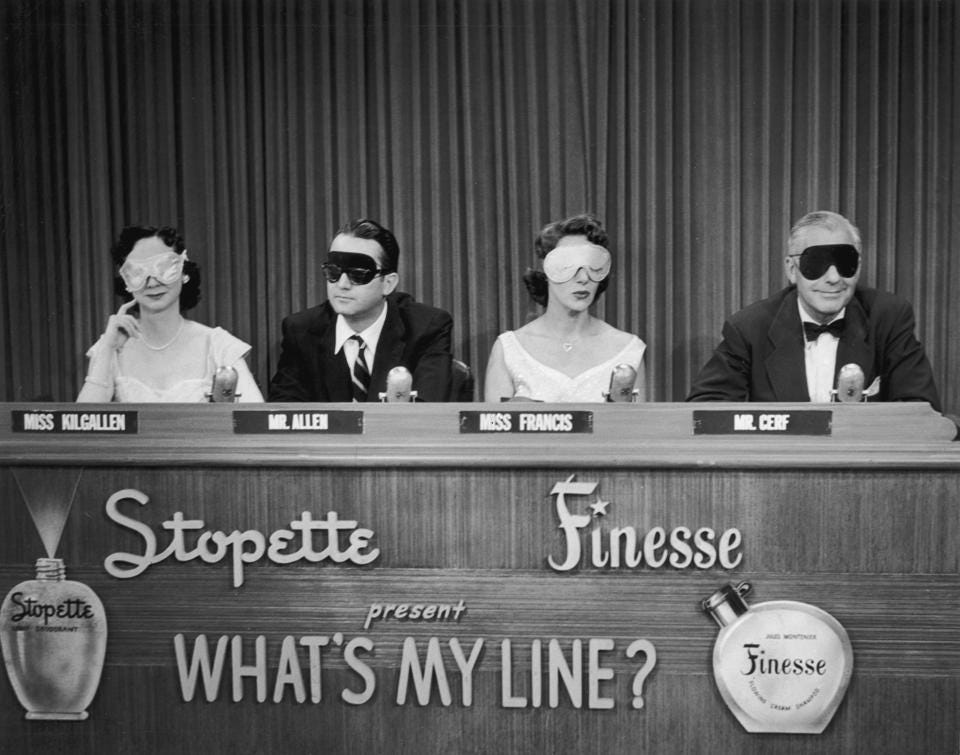
Television followed closely. Early shows introduced asynchronous participation, letting viewers send in clips (most famously on America’s Funniest Home Videos). The first game shows brought select viewers & celebrities directly into the studio, letting them play them games with famous hosts. Soon, shows added out-of-band participation, giving viewers a chance to shape the story through calls, votes, and posts. Today, the most prominent participation method is social media, where audience sentiment can shape storylines, choose victors, and pick new contestants. The 2010’s were famously the decade of social television - with companies rushing to augment the TV and live events.
The 2000’s brought up a whole new type of bottoms-up media that grew through the likes of Soundcloud, Vine, Youtube, Twitch, and Instagram. Artists and creators could get massive distribution from the comfort of their own homes. Creators got access to advanced creative tools (without heavy equipment or dedicated camera crews), innovated on consumer-friendly formats (like Vine’s short looping videos, Periscope’s realtime video, and Clubhouse’s audio rooms), and tried out new types of interactions (starting with comments/likes and evolving to co-broadcasting, dueting, commentating, and more).
In the past decade, we’ve seen glimmers of a new type of TV, that combines the participatory advancements in new media with the mass appeal, cultural value, and distribution of traditional TV. The key is finding content that can engage individual viewers while still appealing to a mass audience. These goals are well articulated by Tit-Bit’s founder George Newnes in 1885:
He held that, first and foremost, all answers should be given in a manner which would make each correspondent feel that he was treated with special consideration; that here behind this newspaper page, there was somebody to whom the inquirer’s affairs were of real human interest. . . . Secondly, Mr Newnes held that the answers should be couched in such terms, whenever this was possible, as to make them interesting to the general reader as well as to the individual correspondent.1
Why now?
In the past decade, a few trends have combined to bring us hints of the future of what Television can look like: technological improvements, less centralized distribution & playback, and a shift in content viewership.
Technology
15 years ago, delivering video over the internet was a technical problem, and only the biggest companies could scale games and networks to handle hundreds of thousands of simultaneous viewers. In the time since, delivering video over the internet has become more of a commodity (with companies like Mux handling the hardest parts). What took dedicated hardware, long processing times, and specialized distribution networks can now be accomplished with a few API calls. In parallel, technologies for realtime audio & video - like WebRTC - have made applications ranging from 1:1 video chat to Clubhouse rooms with hundreds of speakers possible for even the smallest startups.
Simultaneously, the infrastructure to make massively multiplayer games / synchronous experiences has become more feasible than ever before, with cloud providers enabling “infinite” scalability on demand and consumer devices more powerful than ever. Roblox and Fortnite regularly have 5M+ players concurrently online playing games together (and multiples of that during live events). This is perhaps most visible in the recent “Watch Party” phenomena - every major streaming company released a version of in-sync group video playback across devices & geographies in the past 12 months.
Distribution & Playback
The devices we watch TV on today are vastly different from 20 years ago: We aren’t tethered down by a physical cable connection (or large antennas), and the devices we are watching on have processing power that competes with our PCs.
Importantly in this shift, each streaming service is able to control the player and experience in ways that weren’t possible before. Streaming services are essentially apps - on your phone, on your smart TV, and even on Xfinity - unlocking a new generation of value-add services on top. Amazon built X-Ray directly into their video player, allowing viewers to see scene-by-scene information as they watch. Netflix has built in interactive cues (ranging from “Skip Intro” to Choose Your Own Adventure), making it easy to use your phone to control your TV playback.
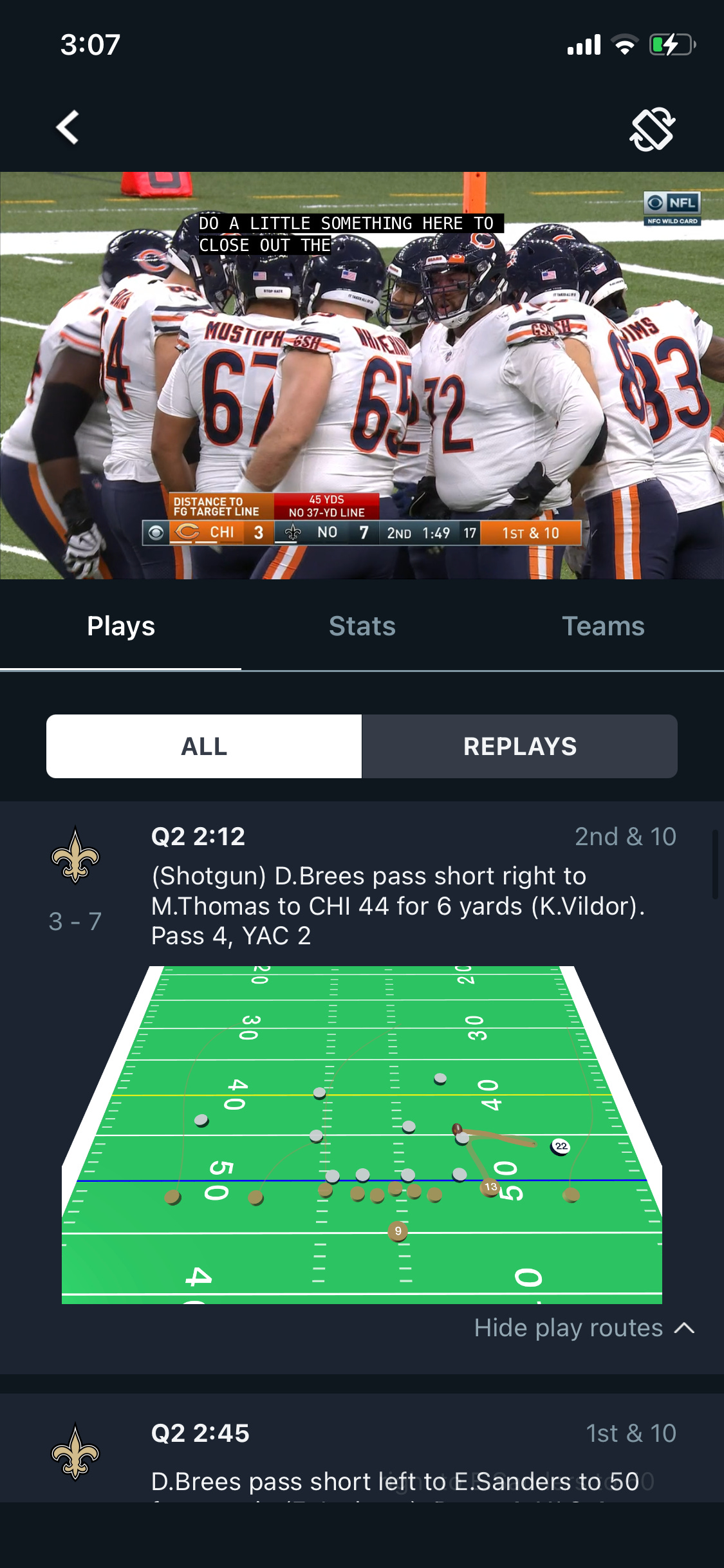
There has been no shortage of 2nd screen experiences, with more people using their phones while watching TV every year. Hidden in this, though, is a merging of 1st and 2nd screen experiences. Today, the Netflix and Amazon apps look like Chromecast remote controls - but they are integrating features that turn them into interactive experiences, perfectly synchronized with what is playing on the big screen.
Content
The time spent on SVOD (like Netflix), VOD & Live (like Youtube & Twitch), and UGC Video (like TikTok) have been surging, while traditional TV struggles to compete, particularly with Gen-Z.
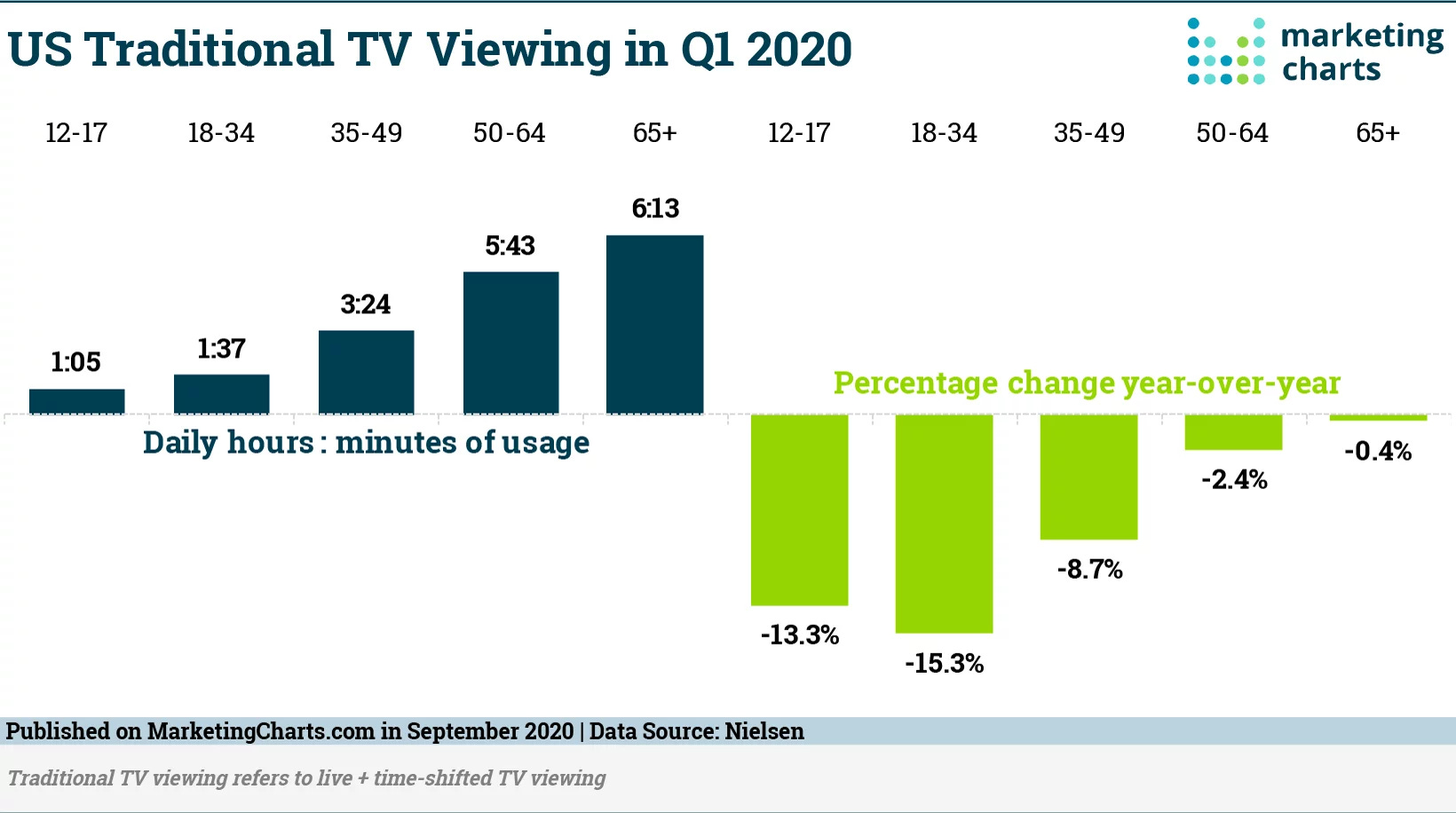
It’s no surprise that viewership on traditional kids networks, like Nickelodeon, is plummeting.
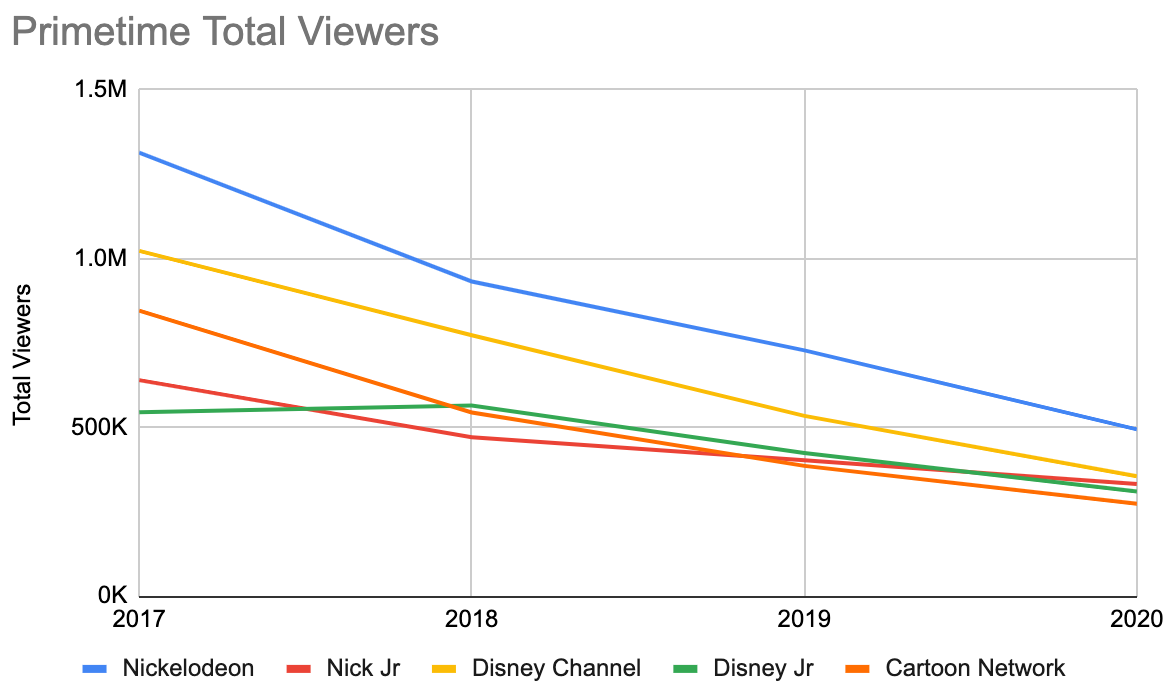
This is not for a lack of trying: Nickelodeon broadcasted an NFL Playoff Game (complete with virtual endzone slime cannons) and Charli D'Amelio got slimed during the Kids Choice Awards.
TikTok, Instagram, and Snap are minting new influencers and viral stars every day, and many are using these platforms to create episodic content (VOD, like Susi’s OnlyPans & Alex’s Supercar Blondie, and Live, like NYU Girls Roasting Tech Guys). The NYU Girls just got signed by WME!
New networks, like Brat, are emerging to capture this trend in the form of informal scripted TV, with a simple playbook:
Feature creators that audiences want to watch. Attaway Hospital has a rotating set of creators (most famously Dixie D’Amelio), and offers them formal acting experience in a differentiated platform with new audiences (via co-stars/cross-over episodes).
Distribute over existing channels, like Youtube. This is possible by structuring the production so the per-minute cost of these shows is significantly lower - yes, that means we aren’t getting Game of Thrones quality content, but it also means we can get more timely content and afford to distribute for free.
In parallel, Video Games have created new ways for audiences to connect with stories and IP in new, interactive ways. While “Video Games” often evokes Cyberpunk-vibes, consider the millions of casual gamers on Fortnite: they hop into virtual rooms with their favorite artists, dress up in their favorite Star Wars outfits, and video chat with friends (and soon have their in-game avatar mimic their IRL expressions). Matthew Ball’s “What Is an Entertainment Company in 2021 and Why Does the Answer Matter?“ sums this trend up well:
Consider the evolution of TV/video versus games over the past fifteen years. The MCU films and series of 2021 are more interconnected, complex, and visually impressive than 2008’s Iron Man, but they’re still rather similar. Games, meanwhile, have been entirely reinvented for live services, social multiplayer, and UGC. Now, we’re only a few years from the point in which millions will come home to join a live event with a real-time motion capture hero like Tony Stark (who will likely not be performed by Robert Downey Jr., even though it will look like him) alongside their friends. Not long after, these will be integrated into the weekly release schedule a TV series, thereby enabling the audience to help the heroes as they watch them
What’s next?
In 2003, the biggest controversy on American Idol was the votes - Clay Aiken lost by less than a 1% margin, but the story was all about Verizon dropping hundreds of millions of calls that night due to outdated infrastructure. In 2018, that same ire was generated by HQ Trivia timing out players during their buggy NYE broadcast due to server scalability issues.
In the past few years, we’ve seen the emergence of new platforms, content formats, and technologies power a new wave of interactive storytelling. HQ Trivia showed us the power of game shows direct to your phone, Bandersnatch gave us Choose-Your-Own-Adventure storytelling on our TVs, Rival Peaks let us play a Video-Game-meets-AI reality TV, and the NYU Girls allowed us participate in the future of dating shows. In the next few years, we are going to see interactive storytelling content pipelines grow, SVOD companies talk about “engagement” in the same sentence as “watch time”, and interactivity across a variety of primetime shows.
Inevitably, much of this new content will require experimentation and iteration. Facebook Watch invested in a variety of trials, from Confetti (an HQ Trivia competitor) to SKAM Austin (an innovative cross-medium show, but suffering from all the pitfalls of the FB brand: “content has seldom felt so indistinguishable from marketing”2). Netflix created 13 interactive shows, all utilizing a CYOA style with varying reception, and is continuing to invest and hire in product and content. For all the Quibi criticism, the mobile-first medium opened up interesting perspectives on storytelling (but suffered from a traditional content slate that didn’t utilize the new medium in interesting ways).
From Kate Jackson’s “George Newnes and the New Journalism in Britain, 1880–1910: Culture and Profit”
https://slate.com/technology/2018/05/skam-austin-is-an-innovative-teen-drama-and-an-ad-for-facebook.html