Speculation is the Medium
How probability is reshaping the town square

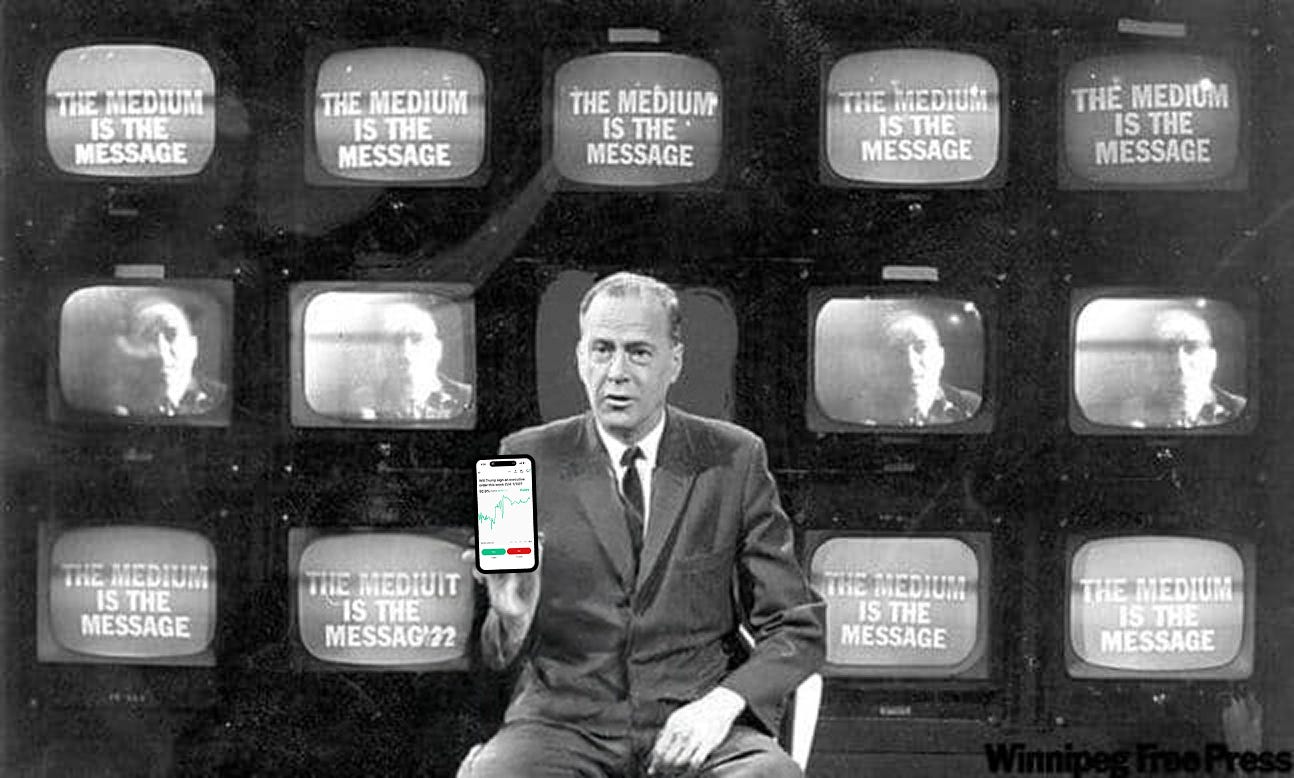
Marshall McLuhan famously argued that the medium matters as much as the message.
Today, that medium increasingly looks like a chart.
Millions of people watch probabilities change on Kalshi, liquidity grow on Polymarket, and prices update on Pump.fun. These signals have become the surface where attention converges, truth is inferred, and events are interpreted in real time.
What’s happening on prediction markets isn’t just new content. It’s a glimpse into how consumer media will evolve.
Participation, with consequences
Every new content medium has brought new forms of interaction. Advice columns let readers write in. Reality TV let viewers vote. Live streaming video let people play with millions. Today, AI generates new content at the speed we consume it.
Engagement accelerated, but interactive storytelling has largely stalled. Participation was layered on top of content, not built into it.
Speculative systems flip the script by combining three core primitives: real-time feedback, shared visibility, and public stakes.
Real-time feedback
Media has always used numbers: scores, odds, box office projections, ratings. But these signals were episodic. They updated occasionally, and interpretation happened elsewhere.
Speculative systems compress interpretation into a single, continuously updating signal. Every refresh forces a re-reading of what the crowd believes might happen next. The signal doesn’t wait for the story to end; it becomes the story.
Shared visibility
Comments, votes, and reactions fragment and bias attention. They’re filtered, moderated, and siloed.
Speculative systems concentrate attention. Everyone sees the same chart, the same movement, the same shifts in belief. There is no hidden vote, and no priviledged interpretation. Meaning forms on a shared surface, in full view.
Public Stakes
Speculation requires taking a position, backed by money, reputation, and identity. Predictions aren’t just expressed; they’re exposed. They can be tracked, measured, and revisited.
That public accountability reshapes behavior. It disciplines belief, rewards accuracy, and turns participation from expression into commitment.
Two speeds of speculation
Memecoins and prediction markets represent two very different manifestations of the same medium.
Memecoins operate at the speed of attention. Narrative arcs (discovery, momentum, derivatives, collapse) compress into minutes, by turning token creation into a live spectacle: anyone can mint a coin instantly, and its price action unfolds publicly: trade by trade, tick by tick.
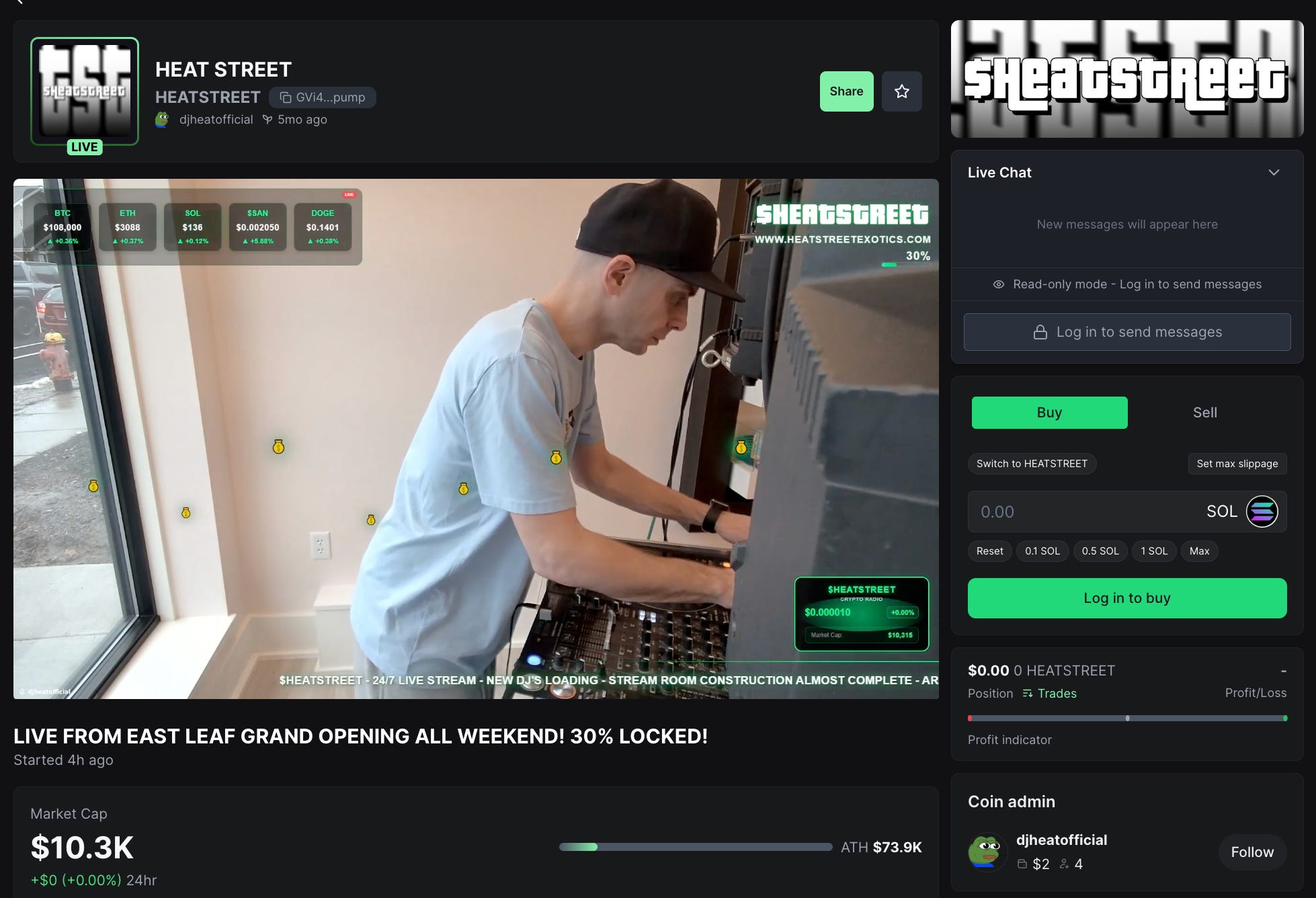
Notably, a token like Iggy Azalea’s $MOTHER isn’t about utility. It is a flash narrative people buy into because the social signal moves fast enough to attract liquidity. When attention fades, the price follows.
Prediction markets, conversely, move at the speed of uncertainty. Participants trade on outcomes, producing a continuously updating probability curve that reflects collective belief under risk. Unlike polls or punditry, the signal is endogenous: every update is backed by capital and reputation.
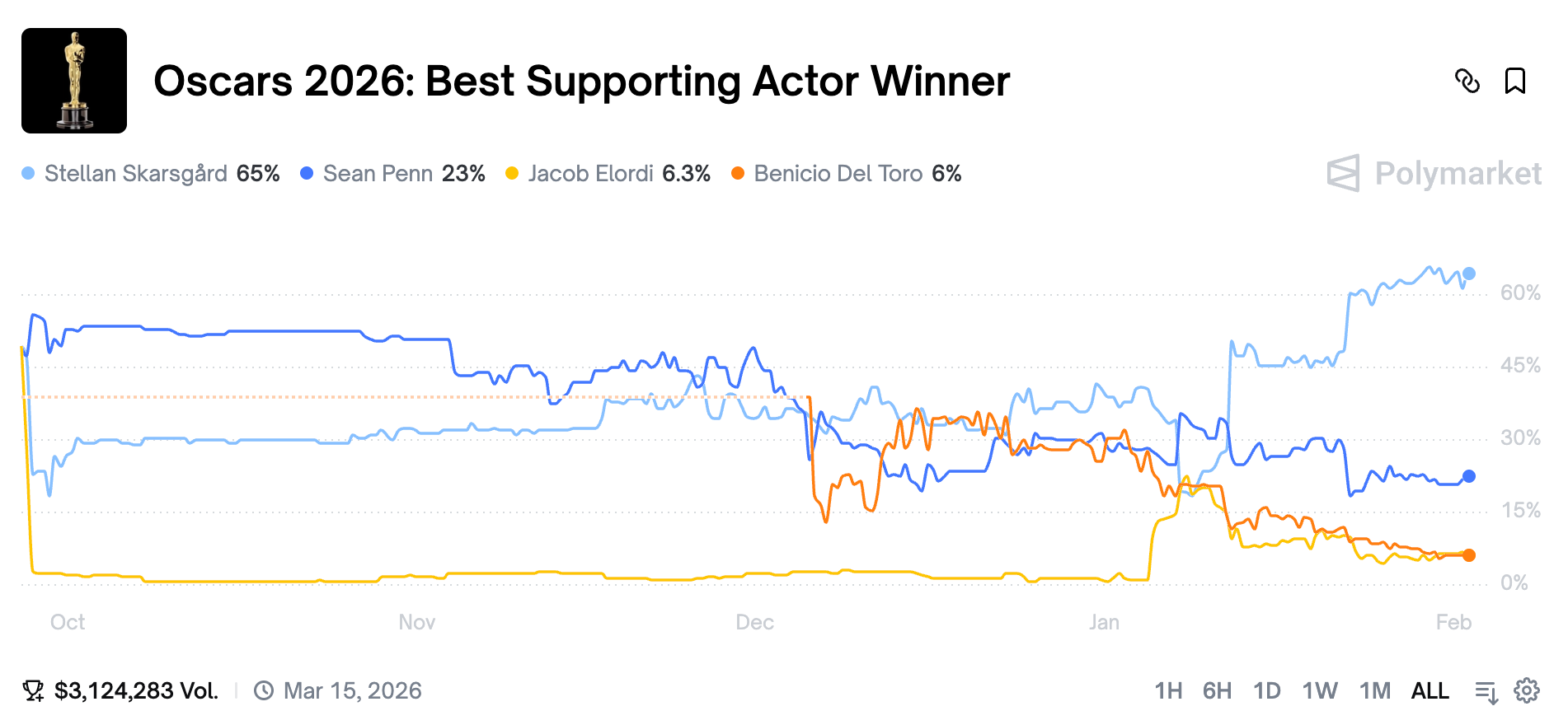
Memecoins make momentum visible.
Prediction markets make uncertainty legible.
In both cases, the media object isn’t the underlying asset or event. It’s the signal.
Numerical spectacle
It’s tempting to dismiss all of this as gambling. And today, the narrative certainly supports that: Kalshi and Polymarket move $10B+ per month, memecoins are back (maybe), and fraud is alive and well (most recently in the form of insider trading).
But focusing only on trading misses the broader shift. Financial backing establishes a baseline signal, grounded in money and reputation. Interpretation then spreads everywhere.
Journalists cite prediction market probabilities as indicators of collective belief. Sports broadcasts reference betting lines as context for viewers who never wager. Box office openings and ratings scores function as instant social verdicts.
What matters is that these numbers are treated as social consensus.
Speculation as a media primitive
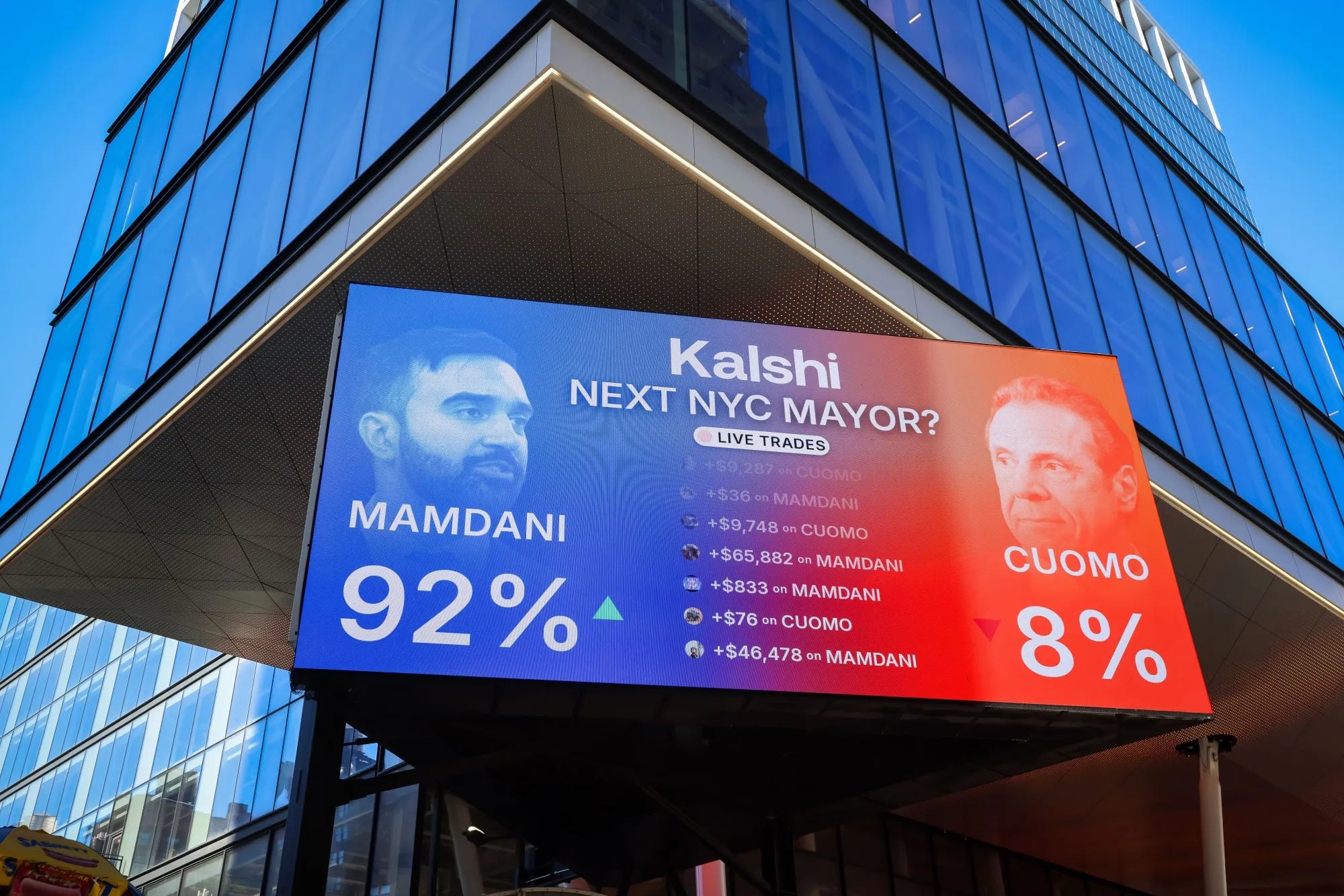
Speculation isn’t replacing media. It’s becoming part of its grammar.
News outlets now incorporate probability directly into coverage. A new class of “prediction influencers” has emerged, closer to policy wonks than Gen-Z dancers. Early experiments will look cringe, then quickly normalize.
If speculation is becoming a media primitive, we should expect it to reshape multiple layers of media at once.
Narrative
More content will use speculative signals to shape plot. At first, probabilities will be tacked on: news anchors citing Kalshi, broadcasts flashing NFL win odds generated by Amazon. Over time, these signals move from commentary to mechanics.
Imagine a version of The Bachelor with season-long player “stocks”, public prediction markets (prop bets and all), and memecoins that operate at the timescale of a single live episode.
Distribution
Film and television will increasingly use prediction markets as a distribution layer. Audiences engage earlier, attention lasts longer, and participation starts before release. Early bets create early believers, turning passive viewers into invested supporters.
Scale
Speculation today clusters around global events. The next wave moves downward, to smaller communities, niche fandoms, and personal milestones. The medium shrinks from world-historical to socially intimate.
Credibility
The next generation of Nate Silver won’t be judged by punditry, but by market accuracy. Track records will be public, cumulative, and hard to hand-wave away. This will bring a wave of both grounded opinions, and more efforts to manipulate results.
Social media didn’t just change what we talk about; it changed how we talk: shorter, faster, optimized for reaction. Speculative media changes how we watch: continuously, collectively, and numerically.
We don’t just watch stories anymore. We watch expectations move in real time. And that movement is the medium.